Choosing a Cantilever Parasol
Cantilever parasols offer real flexibility, but there are a few things worth understanding before you buy.
How a Cantilever Differs from a Traditional Parasol
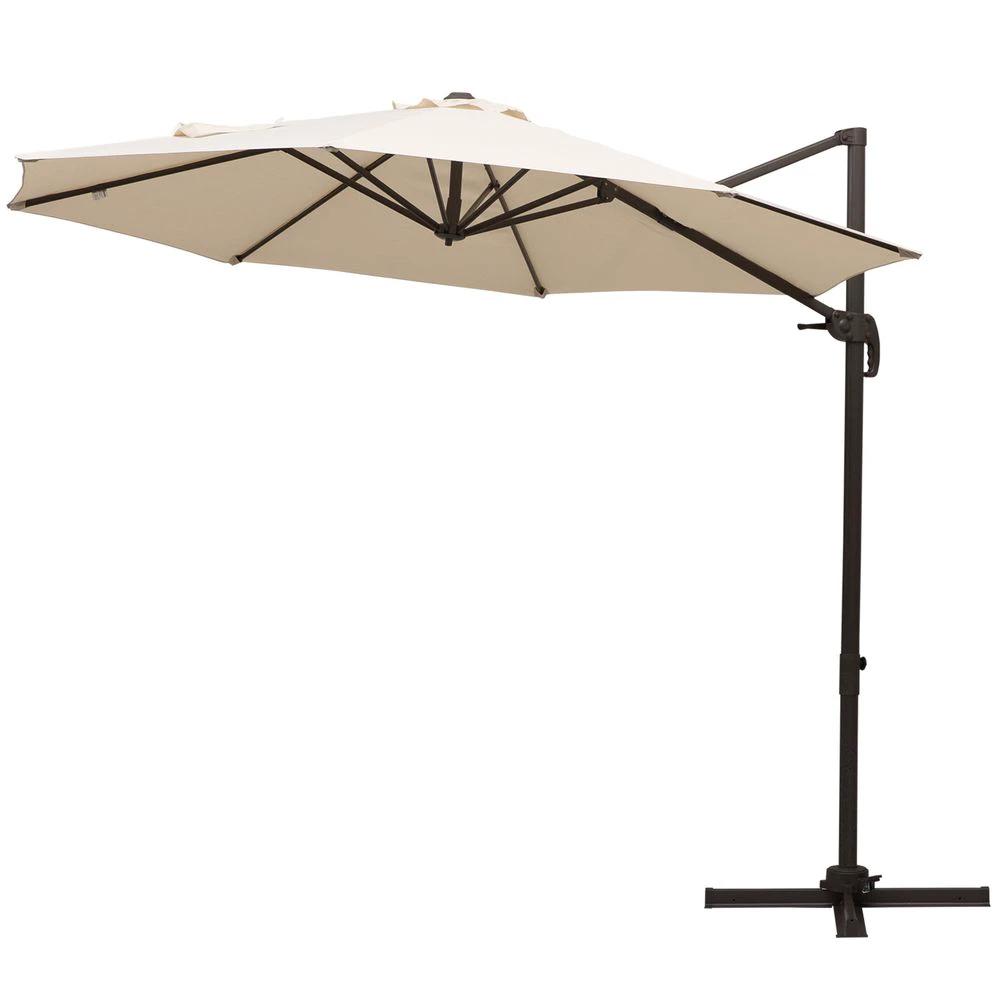
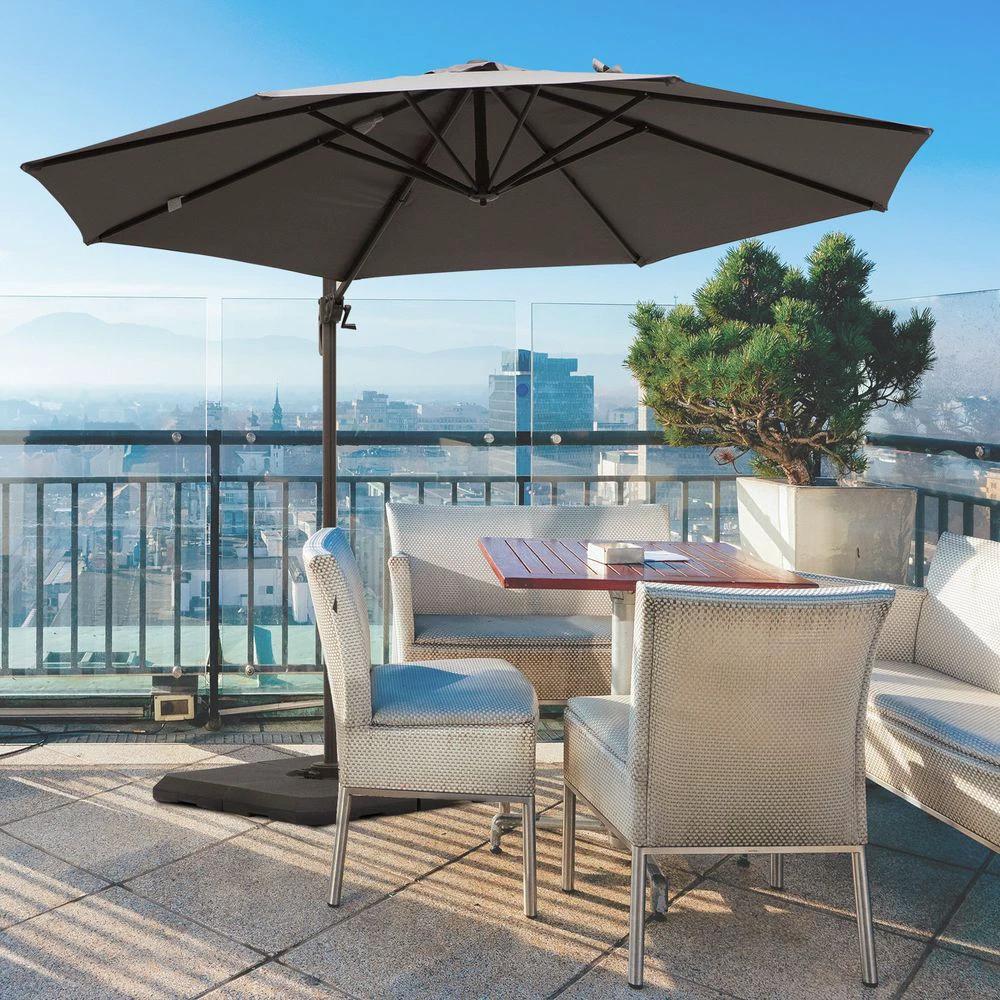
A traditional parasol has a pole in the centre, usually feeding through a hole in your table. A cantilever parasol moves that pole off to the side, with an arm that reaches over your seating area. The advantage is a clear space underneath, which works well over fixed seating, a sofa set, or a table that has no parasol hole. The trade-off is that they need a heavier, more stable base to counter the overhang.
Base and Stability
This is the most important point with any cantilever parasol. Because the canopy is offset, the parasol relies entirely on the weight of its base to stay upright. Many cantilever models use a cross-shaped base that you weigh down with paving slabs, or a heavy fillable base. Always follow the recommended base weight for your specific model, and add more weight if your garden is open or exposed.
Tilt and Rotation
One of the best features of a cantilever is how easily you can move the shade. A tilt function lets you angle the canopy to block low morning or evening sun, while a rotating models let you swing the whole canopy around its base to follow the sun through the day. If you spend long afternoons outside, these features are well worth having.
Size and Coverage
As with any parasol, the canopy should extend beyond the area you want to shade. A 3m cantilever comfortably covers a four to six seat dining set or a lounger with room to spare. Measure the area you want covered and allow a little extra, as the sun moves and so will the shadow.
Cantilever parasols need a base to match, so take a look at our parasol bases, or browse the full garden parasols range if you want to compare with traditional centre-pole designs.