


Cart
0
Traditional Radiators
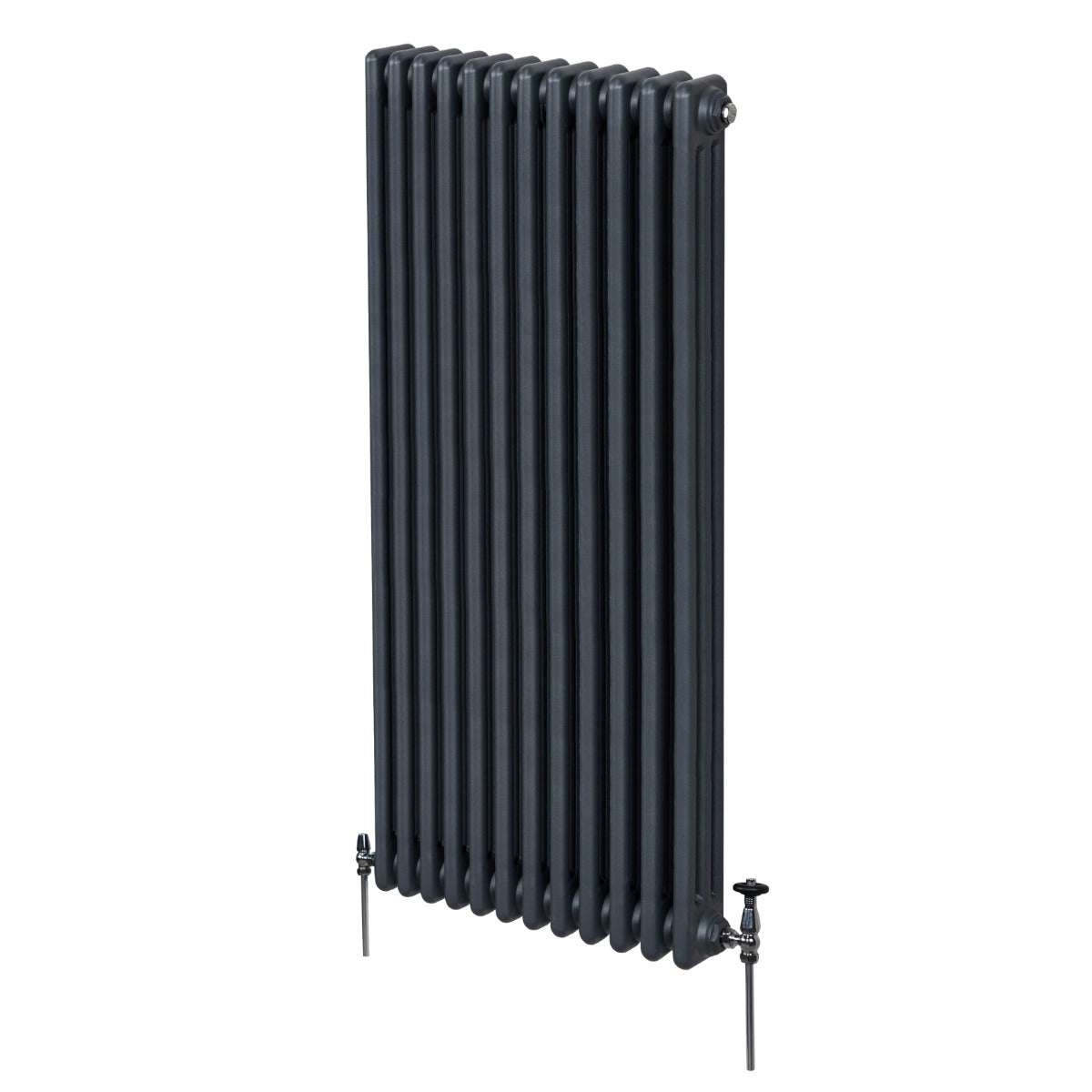
Column radiators date back to Victorian times, yet they're still one of the best-selling heating options. The design hasn't changed much because it doesn't need to, vertical tubes arranged in rows simply work. You'll find them in restored period homes and brand-new developments alike.
White, black, and anthracite grey are the standard colours. Anthracite has taken off massively over the past few years. It costs a bit more but looks sharp in modern interiors, especially against lighter walls.


Frequently Asked Questions
Find answers to common questions about Traditional Radiators
What is the difference between 2 column and 3 column traditional radiators?
The main difference lies in heat output and depth. Three-column radiators have an additional row of tubes, which means they produce more heat from the same height and width but project further from the wall. Two-column models are slimmer and work better in tighter spaces, whilst 3-column versions suit rooms needing higher heat output.
Can traditional radiators work with modern central heating systems?
Yes, absolutely. Traditional radiators function perfectly with contemporary central heating systems, including combination boilers and systems using thermostatic controls. The connections are standard 15mm fittings that work with modern pipework and valves without any special adaptors required.
How do I work out what size traditional radiator I need?
Calculate the room's volume in cubic metres and multiply by 40 to get a rough BTU requirement. Check radiator specifications for their heat output, typically shown in watts (multiply by 3.41 to convert to BTU). For accurate sizing, consider factors like insulation quality, window size, and room usage.
Are traditional radiators more expensive to run than modern ones?
Not necessarily. Running costs depend on heat output efficiency rather than design style. A properly sized traditional radiator with good thermostatic control can be just as economical as a modern flat panel. The key is matching the radiator to the room and using smart controls.
Do traditional radiators take longer to heat up?
Traditional column radiators warm up slightly slower than some modern designs because of their greater water content, but the difference is minimal in practice. Once heated, they retain warmth longer, which can actually improve efficiency by reducing on-off cycling.
What colours are available for traditional radiators?
White, black, and anthracite grey are the most common finishes. White offers a clean, classic look that suits any décor. Anthracite provides a sophisticated modern twist, whilst black creates dramatic impact. Some manufacturers offer custom colours, though standard options prove sufficient for most homes.
Can I install a traditional radiator myself?
Basic DIY skills allow you to replace a like-for-like radiator, but any work involving gas boilers or system modifications requires a Gas Safe registered engineer. If pipe positions don't match your new radiator, professional installation ensures proper connections and system safety.
How long do traditional radiators typically last?
With proper maintenance, quality traditional radiators easily last 15-20 years or more. The robust carbon steel construction resists corrosion when the system contains appropriate inhibitors. Regular system servicing prevents sludge build-up that could reduce lifespan.