Ask someone why they want a radiator cover and you'll get one of about five different answers. Some people want to hide an ugly old radiator. Some want to stop a toddler burning their hands. Some want a shelf in a hallway that has nowhere to put keys. Some are tired of the heat marks creeping up the wall above the radiator. And some just want the room to feel finished rather than having a lump of painted metal interrupting the wall.
These are genuinely different goals, and they point toward genuinely different covers. A cover that's perfect for childproofing might be the wrong choice for someone who mainly wants a display shelf. So rather than listing cover types and leaving you to work out which suits you, this guide is organised the other way around: by the job you're hiring a radiator cover to do. Find the job that matches your reason for buying, and the right cover follows.
A radiator cover isn't one product. It's five different solutions that happen to share a shape.
THE JOB ONE
Hide an ugly or dated radiator
This is the most common reason people buy a cover, and it's where the biggest worry lives: will hiding the radiator stop it heating the room? It's worth answering that properly before anything else, because it shapes the whole decision.
The heat question, answered honestly
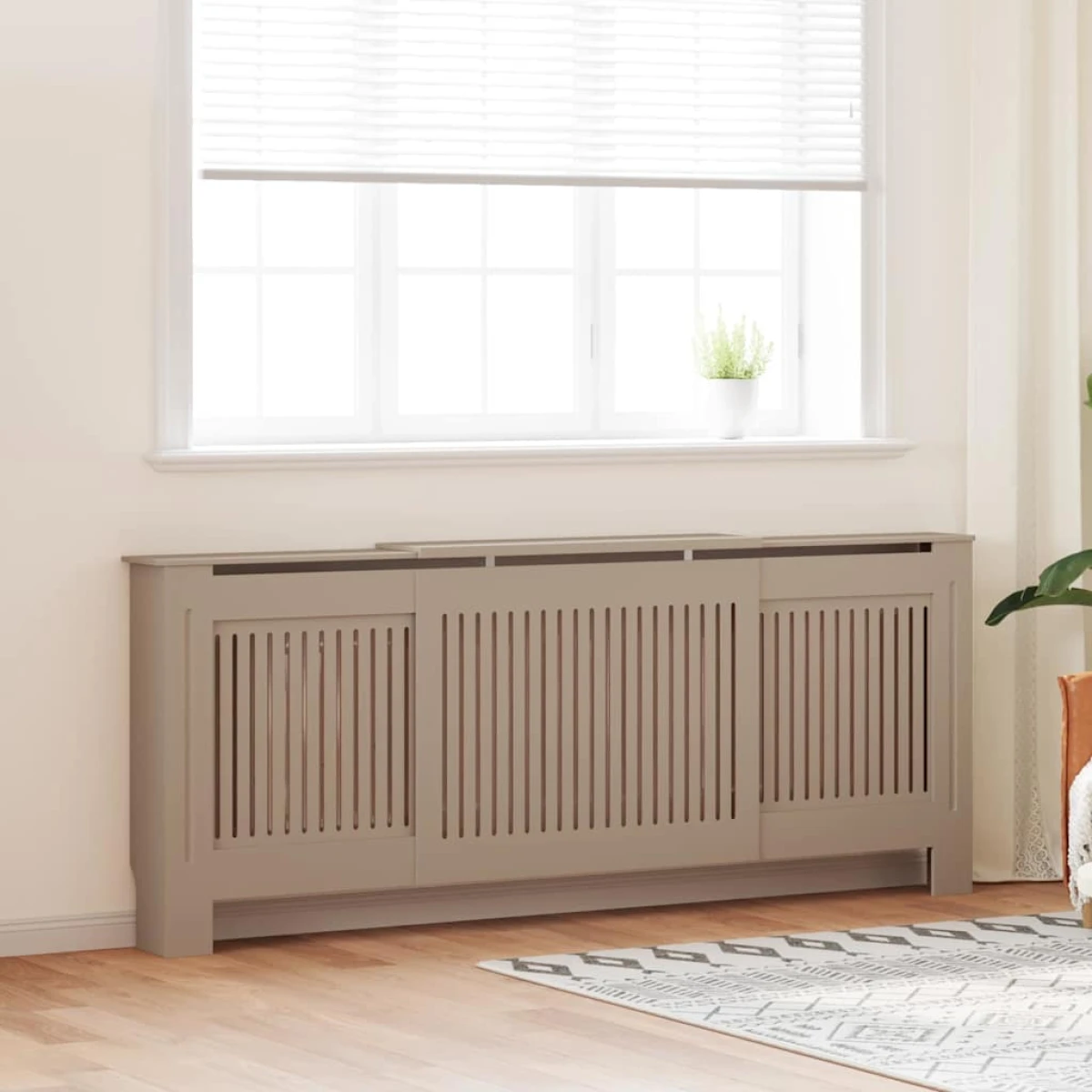
A well-designed radiator cover reduces heat output slightly, but far less than most people fear. The key is the design. A cover with a slatted or grille front and an open or vented top lets warm air circulate out into the room rather than trapping it. Solid-fronted covers with no ventilation are the ones that genuinely choke heat output. Every cover worth buying, including the slatted designs across our range, is built with vents and gaps specifically so heat keeps flowing.
There's even a counterintuitive upside. A cover with a flat top and a back panel can act a little like a radiator shelf, nudging warm air out into the room rather than letting it rise straight up the wall. The net effect on a well-vented cover is close to neutral. You lose a small amount of efficiency and gain a much better-looking room. For most people that's an easy trade.
A well-vented radiator cover costs you very little heat. A solid-fronted one with no airflow is the only real mistake.
The right cover for hiding
For pure concealment, you want a cover whose style suits the room. The solid pine radiator cover in our range works well in traditional and rustic rooms. Its modern slat design and wax brown finish show off the wood's grain and knots. For contemporary spaces, a white painted MDF cover like the HOMCOM Wooden Radiator Cover in white gives a clean, modern look that disappears into a neutral wall. The slatted fronts on both let heat through while turning the radiator into a piece of furniture rather than something you try to hide behind a sofa.
THE JOB TWO
Stop children and pets touching a hot radiator
Radiators get hot enough to cause genuine burns, and a crawling toddler or a curious pet doesn't know to stay away. For parents of young children especially, the safety job is the whole reason for buying, and it changes what matters in a cover.
What matters for safety
Three things. First, the cover needs to fully enclose the radiator on the front and sides, not just sit in front of it, so there's no way to reach around to the hot surface. Second, the top surface needs to stay cool enough to touch, which a vented design with a wooden or MDF top achieves because the material doesn't conduct heat the way the metal radiator does. Third, the slats need to be close enough together that small fingers can't push through to the element behind.
The HOMCOM covers in our range are explicitly designed with this in mind. The slatted structure has enough ventilation for heat to flow but the gaps are sized to prevent children and pets touching the hot radiator surface, which is exactly the balance a safety-focused buyer needs. The wall-fixing fittings that come with these covers matter here too: a properly wall-mounted cover can't be pulled over by a child leaning on it.
The right cover for safety
Choose a fully enclosing slatted MDF or wooden cover with wall fittings, close-spaced slats, and a top that stays cool. Avoid open-backed or partial covers that leave the sides exposed. The childproofing job is the one where you should prioritise the construction over the looks, though happily most safety-suitable covers look good too.
THE JOB THREE
Gain a useful shelf or surface
In a lot of rooms, the radiator sits exactly where you'd want a surface: under a window, along a hallway, beside a doorway. A radiator cover with a flat, sturdy top turns that wasted space into a genuinely useful shelf, which is a real motivation for buying in narrow halls and small rooms where surfaces are scarce.
What matters for a usable surface
The top needs to be flat, level, and sturdy enough to actually use. Most quality covers support a reasonable load on the top (typically up to around 30kg, plenty for books, photo frames, a lamp, or a lightweight plant), but it's worth checking the stated capacity if you plan to put anything substantial up there. A water-resistant or lacquered top, like the white lacquer finish on the vidaXL engineered wood cover in our range, wipes clean easily and resists the marks that a hallway surface inevitably collects.
Some covers go further and build storage into the unit itself. A cover with flip drawers or a cross-pattern cabinet front, like the HOMCOM design with two flip drawers, gives you concealed storage for keys, gloves, and the hallway clutter that has nowhere to live, on top of the display surface. For a hallway specifically, that combination of a display shelf and hidden storage is hard to beat.
The right cover for a surface
Choose a cover with a flat lacquered or sealed top and, if storage matters, integrated drawers or a cabinet front. Check the top's load capacity if you intend to use it for more than light decor. Hallways and under-window positions benefit most from this kind of cover.
THE JOB FOUR
Stop heat marks creeping up the wall
This is the job people don't realise they have until they notice the problem. Over time, the warm air rising off a radiator carries dust and deposits it on the wall above, leaving grey or yellowish streaks that no amount of cleaning fully removes. It's most visible above radiators on light-coloured walls, and it's a slow, frustrating thing to live with.
How a cover helps
A radiator cover with a flat top and a back panel redirects the rising warm air outward into the room rather than letting it travel straight up the wall. This won't completely eliminate the airflow that causes marking, but it significantly reduces the streaking by changing the direction the warm, dusty air travels. For anyone who has repainted the wall above a radiator more than once and watched the marks return, this is a genuine benefit rather than a marketing claim.
The right cover for wall protection
Choose a cover with a solid flat top and a back panel rather than an open-topped frame. The flat top is what redirects the airflow. A cover that's purely a front grille with an open top does less for this particular job. This is one job where the design detail of the top matters more than the front.
THE JOB FIVE
Make the room feel finished
Sometimes there's nothing wrong with the radiator at all. It works, it's not dangerous, the wall's fine. But the room feels slightly unresolved, with a length of painted metal interrupting an otherwise considered space. The aesthetic job is about turning the radiator from an interruption into a deliberate part of the room's design.
What matters for a finished look
This is the job where style leads. The cover should match or complement the room's existing furniture and palette. A white painted cover suits a neutral, modern room and reads almost like built-in joinery. A solid wood cover with a visible grain adds warmth to a room with other wooden pieces. A cover with a cross-pattern or vertical slat front becomes a subtle design feature in its own right. The flat top then becomes a styling opportunity, a place for a lamp, a stack of books, or a plant that ties the radiator into the room rather than leaving it as a gap in the design.
The detail that makes the difference here is proportion. A cover that's the right height and width for the radiator and the wall looks intentional. One that's noticeably too big or too small for the space looks like an afterthought, however nice the cover itself is. Measure carefully before buying so the proportions are right.
The right cover for a finished look
Choose a cover whose style, finish, and proportions match the room. White MDF for clean modern rooms, solid wood for warmer traditional spaces, slatted or cross-pattern fronts as a design feature. Then style the top as you would any other surface in the room.
One thing that applies to every job: measuring
Whichever job you're buying for, the cover has to fit. Radiator covers are sold in standard sizes, so measure your radiator first and choose a cover that comfortably encloses it with a little room to spare. Three measurements matter:
- Width: measure the radiator including the valves at each end, then add a few centimetres of clearance. The cover needs to clear the valves, not just the radiator body.
- Height: the cover should sit a little above the top of the radiator so warm air can escape. Most covers are designed with this clearance built in.
- Depth: standard covers project around 19cm from the wall. Check this works with your space, especially in narrow hallways where a deep cover might obstruct the walkway.
Getting the size right is the single most common radiator cover mistake. A cover that's too small won't fit over the valves; one that's too large looks awkward and wastes wall space. Measure twice, order once.
Matching the cover to your job
The radiator cover that's right for you depends entirely on why you're buying. If you're hiding a dated radiator, prioritise a well-vented slatted design in a style that suits the room. If you're childproofing, prioritise full enclosure, close slats, and wall fittings. If you want a surface, look for a flat sealed top and integrated storage. If you're fighting wall marks, choose a solid flat top with a back panel. And if you just want the room to feel finished, let style and proportion lead.
The radiator covers collection covers solid pine, white painted MDF, and engineered wood designs across slatted, cross-pattern, and drawer-fronted styles, so there's a cover for each of the five jobs. If the radiator itself is the problem rather than its appearance, our designer flat panel radiators and traditional radiators collections cover replacement options, and we'll be looking at both in upcoming guides on modern flat panel and traditional radiator choices.
Free UK mainland delivery applies on every order, dispatched in three to five working days, with no hidden fees. Radiator covers arrive flat-packed with the necessary wall fittings and easy-to-follow instructions, and most assemble in around 30 to 45 minutes. The radiator goes from eyesore to feature in an afternoon.